Spider Solitaire Classic Games
- 4.9
- Rating
- 5.00M
- Installs
- Free
- Price

 Analysis by App-foxy
Spider Solitaire Classic Games is the kind of card game I open when I want something familiar, quiet, and easy to start without committing to a long session. Developed by Guru Puzzle Game, it focuses on Spider Solitaire rather than trying to become a large collection of unrelated activities. That narrow focus is its main appeal: the rules are recognizable, the pace is flexible, and a short break can turn into several rounds before I notice.
My overall view is positive, with one important qualification. This is a relaxing solitaire companion, not a deep strategy game or a social card platform. If you enjoy arranging cards, looking for the next useful move, and replaying a classic format on a phone, it is an easy recommendation. If you need competitive play, rich narrative, or constant novelty, its simplicity may feel limiting.
Why the simple Spider format works so well
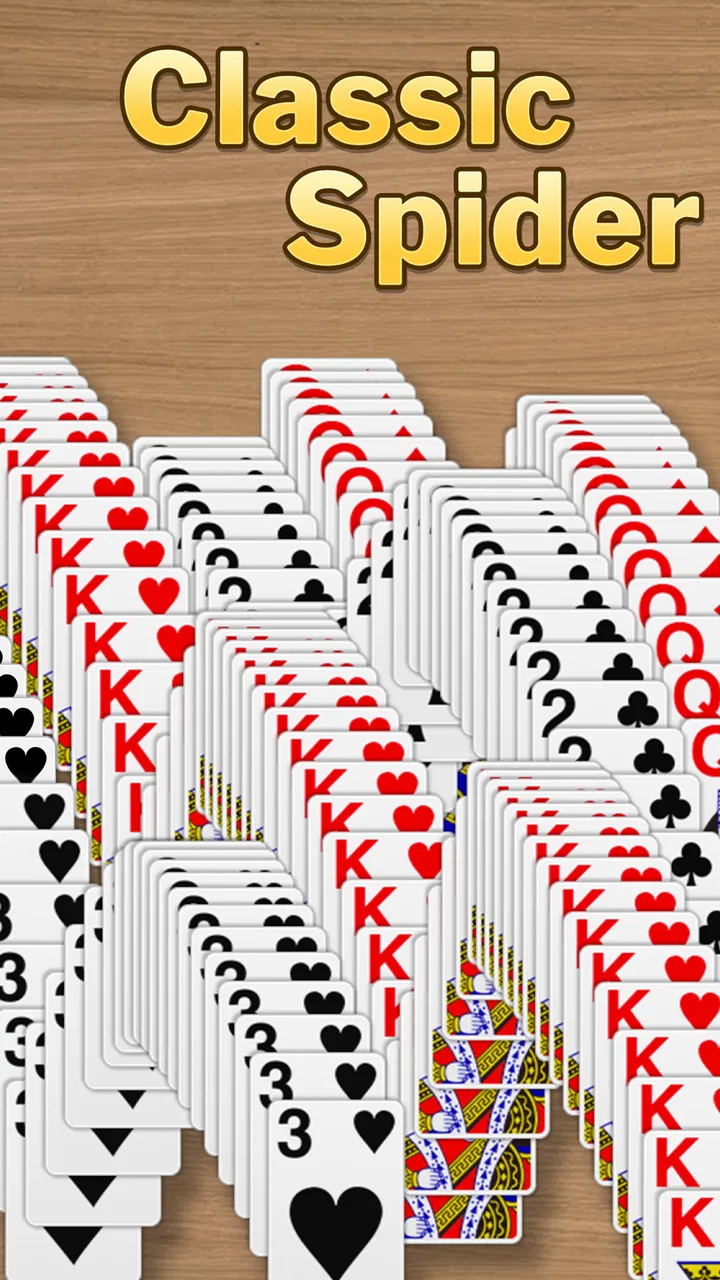
The central experience is deliberately straightforward. I work through the familiar Spider Solitaire structure, building sequences and clearing them from the table. That gives each round a pleasant rhythm: first I scan for obvious moves, then I expose hidden cards, and finally I try to avoid blocking the spaces I will need later. The rules are approachable enough for a casual player, but a careless early move can still make the rest of a deal awkward.
You May Also Like

 Blood Strike: 2.5 Anniversary
Blood Strike’s Loadouts Turn Every Drop Into a Tactical Gamble
A close look at Blood Strike’s custom loadouts: how fast access to signature weapons reshapes its battle royale rhythm, rewards preparation, and narrows the gap between fights.

 Pandora - Music & Podcasts
Pandora’s Music Is Easy to Start, but Harder to Recover
Pandora’s strength is its low-effort path from a seed to a station. Its weak spot is how much confidence it asks you to place in connection, setup, and quiet recovery.

 8 Ball Pool
 Is Built on Rivalries, Rematches, and Routine
A close look at the rivalries, rematches, shared routines, and unanswered safety questions that turn a quick pool match into a persistent mobile community.

 Samsung Music
’s Quiet Strength Is Playing What You Already Own
Its reach comes less from spectacle than from dependable access to a personal library. That simplicity is both the app’s strongest retention engine and its ceiling.

 AccuWeather: Weather Radar
AccuWeather Review: A Quick, Clear Forecast for Everyday Decisions
For everyday plans, the best forecast is the one you can understand quickly. AccuWeather makes rain timing, radar, and local conditions easy to act on, with a few trade-offs.

 Hill Climb Racing
Why Hill Climb Racing Still Turns Crashes Into One More Run
A tiny car, a bumpy hill and one more upgrade: Hill Climb Racing keeps resurfacing because its simple chaos makes every near-miss feel personal.
More From Our News Desk



That balance is what makes the game more satisfying than an entirely automatic time-killer. I can play while waiting for an appointment, during a short commute, or at the end of the day when I do not want to learn a new system. A round does not demand the attention of a multiplayer match, yet it still gives me small decisions to make. I am usually thinking one or two moves ahead rather than simply tapping through a preset sequence.
The presentation also benefits from restraint. A dedicated Spider game does not need a complicated menu structure to explain itself. The short description identifies it plainly as Spider Solitaire, and the store summary positions it as a classic, relaxing card experience. In practice, that clarity matters. I know what I am opening, and I am not pushed toward an unrelated mode before I can begin playing.
A useful routine for short breaks
My favorite way to use it is as a deliberate pause between tasks. For example, after finishing a few emails, I can play one round, stop when the round ends, and return to work without having to remember a story, a team, or a complicated objective. That makes it better suited to fragmented free time than many larger mobile games.
It also works well as a wind-down activity. The slower pace gives me something to focus on without the pressure of a countdown or an opponent waiting for my response. Players who like sorting, pattern recognition, and gentle problem solving will probably understand the appeal immediately. The game is not trying to overwhelm me with content; it is offering a repeatable mental habit.
There is a small trade-off here. The same calm structure that makes it comfortable can make it feel repetitive if I play for a long stretch. I would not choose it for an evening when I want a strong sense of progression. I would choose it for several modest sessions spread across the day.
What I pay attention to during a deal
The most useful improvement in my own play is to stop treating every available move as equally good. When I see a possible sequence, I first consider whether moving it will reveal a hidden card or open a column. A move that looks attractive because it creates a neat run can be harmful if it removes the only flexible cards from a crowded area.
I also try to preserve empty spaces rather than filling them immediately. An open column is valuable because it lets me move a longer sequence and reorganize the table. Filling it with the first available card may make the layout look tidier, but it can reduce my options later. This is one of the reasons the game remains engaging despite its simple rules: the best move is often the one that keeps future moves possible.
Another practical habit is to inspect the full layout before committing to a long sequence. I look for cards that are buried behind the current arrangement and ask whether a different order would expose them sooner. That approach does not guarantee success, but it reduces the feeling that I am playing randomly. For new players, this is a better starting point than focusing only on clearing cards as quickly as possible.
Where the experience feels strongest
The strongest part of this release is its accessibility. It is free to start, carries an Everyone content rating, and supports devices running Android 6.0 or later. That broad compatibility makes it a practical choice for people who want a classic card game on an older phone rather than a demanding modern title.
The audience response also suggests that the basic formula connects with a large number of players. It has passed one million installs and holds a 4.9 average from around 107 thousand ratings. I do not treat popularity as proof that every player will enjoy it, but those figures fit my impression that the game succeeds at delivering a familiar, low-friction solitaire session.
Guru Puzzle Game has kept the release active enough to list version 5.3.2-25122560. For me, the important point is not the version label itself but the sense that this is an established app rather than an abandoned experiment. I would still check device compatibility before installing on very old hardware, but the stated minimum of Android 6.0 covers many everyday phones.
Starting is also uncomplicated from a cost perspective. The game is free, while optional in-app purchases are listed at $6.99 per item. That means I can test the core experience without paying first. The sensible approach is to use the free version for several sessions and decide whether any optional purchase would genuinely improve my routine. I would not buy anything simply because I felt rushed; solitaire is most enjoyable when I can take my time.
The limitation that matters most
The main weakness is not a broken mechanic. It is the narrowness of the package. Because the focus stays on Spider Solitaire, players looking for a broad card-game library may eventually want a different app. A general solitaire collection can offer more formats, while a competitive card title can provide opponents, rankings, or a stronger sense of stakes. This game is more comfortable than ambitious.
That limitation becomes clearer during long sessions. The first few rounds can feel pleasantly absorbing, but the repeated layout-and-clear loop may not provide enough variety for someone who expects regular surprises. I would not describe that as a flaw for the intended use; it is a mismatch between the game’s quiet design and a player’s appetite for content.
There is also a strategic limitation built into the classic format. Some players enjoy carefully planning a deal, while others dislike situations where a sequence of choices seems to leave little room for recovery. If I make several poor decisions early, the later board can feel constrained. That is part of Spider Solitaire’s character, but it means the game may not always deliver the instant reward of a casual matching game.
For that reason, I recommend treating each round as a small puzzle rather than as a test of speed. Rushing encourages attractive but shortsighted moves. Slowing down makes the game more readable and gives the format a little more depth. Players who want a relaxing experience should see this as a strength; players who want constant action may find the pace too subdued.
Who should install it
I think it is a strong fit for people who already know Spider Solitaire and want a convenient mobile version. It is also suitable for beginners who prefer learning one classic card format instead of navigating a large app filled with modes. The Everyone rating makes it approachable for a broad audience, and the free entry point removes much of the risk involved in trying it.
It is particularly useful for people who value pause-friendly games. I can put it down between moves, return later, and continue the same kind of thinking without needing a tutorial refresh. That makes it more practical than a real-time multiplayer game when my schedule is unpredictable.
I would also recommend it to players who enjoy improving through habits rather than unlocking systems. A useful personal challenge is to focus on better decisions: uncover hidden cards earlier, protect open columns, and avoid consuming flexible cards too soon. The game does not need a large achievement structure for those goals to make a difference.
On the other hand, I would steer away from it if your priority is social interaction. There is no reason to choose a solitary card format when what you really want is a live opponent, a chat community, or a competitive ladder. I would also suggest looking elsewhere if you need a large range of card games in one installation. The focused design is precisely what helps one player and disappoints another.
How it compares with familiar alternatives
Compared with Klondike Solitaire, Spider Solitaire usually asks me to think more carefully about sequences and column management. Klondike can feel more immediately recognizable to some players, while Spider offers a stronger sense of organizing a crowded layout. I prefer Spider when I want a puzzle with more planning, but I would choose Klondike for a quicker, lighter card break.
Compared with a broad solitaire collection, this game is easier to understand because its purpose is clear from the start. I do not have to decide which of many variants to learn. The exchange is variety: a collection wins if I want to switch formats frequently, while this focused release wins if I want to settle into one familiar routine.
Compared with competitive card games, it is less stressful and less socially engaging. There are no opponent-driven surprises to manage, so I can play at my own pace. That makes it a better match for relaxation, but a weaker choice for anyone who gets motivation from direct competition.
The comparison also explains why I would keep it installed even if I owned other card games. It occupies a specific space: a calm, recognizable Spider experience for short sessions. It does not replace every alternative, and it does not need to. Its value comes from being dependable when I want this particular kind of puzzle.
Practical advice before making it a daily game
I suggest playing without chasing speed during the first sessions. Use the opening moments to identify which columns contain useful hidden cards and which sequences can be moved safely. If the board becomes difficult, review the order of your previous moves instead of tapping repeatedly. That small pause often reveals that an open space was used too early or a flexible card was committed to the wrong column.
It is also worth deciding what you want from the app. If your goal is relaxation, stop after a comfortable round rather than turning the game into a performance test. If your goal is improvement, pay attention to choices that preserve options. The same layout can feel either soothing or frustrating depending on whether I am trying to unwind or force a perfect result.
Because optional purchases cost $6.99 per item, I would keep spending separate from enjoyment of the basic game. Try the free experience first, and only consider an in-app purchase if it addresses a need you actually have. For a player who simply wants occasional Spider Solitaire, paying may not be necessary. For a frequent player who values whatever optional extras are available, the decision should still be based on regular use rather than impulse.
My final recommendation
After spending time with Spider Solitaire Classic Games, I see it as a focused and approachable card game that succeeds by refusing to make the classic format complicated. Guru Puzzle Game has built something easy to pick up, comfortable in short sessions, and thoughtful enough to reward better planning. The free starting point and broad age rating make it simple to try, while the strong player response shows that the format has found a substantial audience.
Its weakness is equally clear: the experience can become repetitive, and it will not satisfy people seeking multiplayer competition, a large collection of variants, or a dramatic progression system. I would not install it expecting a complete card-game universe. I would install it expecting a convenient Spider table that is ready whenever I have a few quiet minutes.
My verdict is a clear recommendation for casual solitaire players, especially those who prefer calm, repeatable puzzles over busy mobile entertainment. If that describes you, this is a sensible free game to keep available on an Android device. If you want variety or rivalry first, choose a broader collection or a competitive alternative instead. For everyone else, Spider Solitaire Classic Games gets the important things right: recognizable rules, an easy entry point, and enough decision-making to make a familiar card game worth returning to.
FAQs for Spider Solitaire Classic Games
01What features does Spider Solitaire Classic offer?
Spider Solitaire Classic provides a timeless card game experience with multiple difficulty levels, customizable themes, and a user-friendly interface. Players can enjoy features like unlimited undo, hints, and detailed statistics to track progress. The game also offers offline play, making it accessible anytime and anywhere.
02Is Spider Solitaire Classic free to play?
Yes, Spider Solitaire Classic is free to download and play. However, it may include optional in-app purchases and ads. These purchases can enhance the gaming experience by removing ads or unlocking additional features, but they are not necessary for enjoying the core gameplay.
03Does Spider Solitaire Classic consume a lot of battery?
Spider Solitaire Classic is designed to be efficient and not overly demanding on your device’s battery life. While prolonged gaming sessions can naturally drain the battery, the app optimizes performance to ensure minimal impact compared to more resource-intensive games.
04Can I play Spider Solitaire Classic without an internet connection?
Absolutely! Spider Solitaire Classic supports offline play, allowing you to enjoy the game without needing an internet connection. This makes it perfect for playing during travel or in areas with unreliable network access, providing uninterrupted gameplay.
05Is Spider Solitaire Classic suitable for beginners?
Yes, Spider Solitaire Classic is suitable for players of all skill levels. It offers different difficulty settings, from easy for beginners to challenging for seasoned players. Additionally, the game provides helpful hints and a tutorial to assist new players in learning the rules and strategies.
Pros
- Classic gameplay that's easy to pick up.
- Smooth animations enhance user experience.
- Multiple difficulty levels available.
- Offline play mode for convenience.
- Minimal ads for uninterrupted play.
Cons
- Limited customization options.
- No online multiplayer feature.
- Graphics could use a modern update.
- Sound effects are basic and repetitive.
- Occasional bugs in touch response.

Spider Solitaire Classic Games
Gallery